- Free Consultation
- 0714954065/ 0707744472

Location
opening Hrs

Your CCTV Footage or WhatsApp Screenshot Might Not Be Admissible. Here’s Why
Your CCTV Footage or WhatsApp Screenshot Might Not Be Admissible. Here’s Why
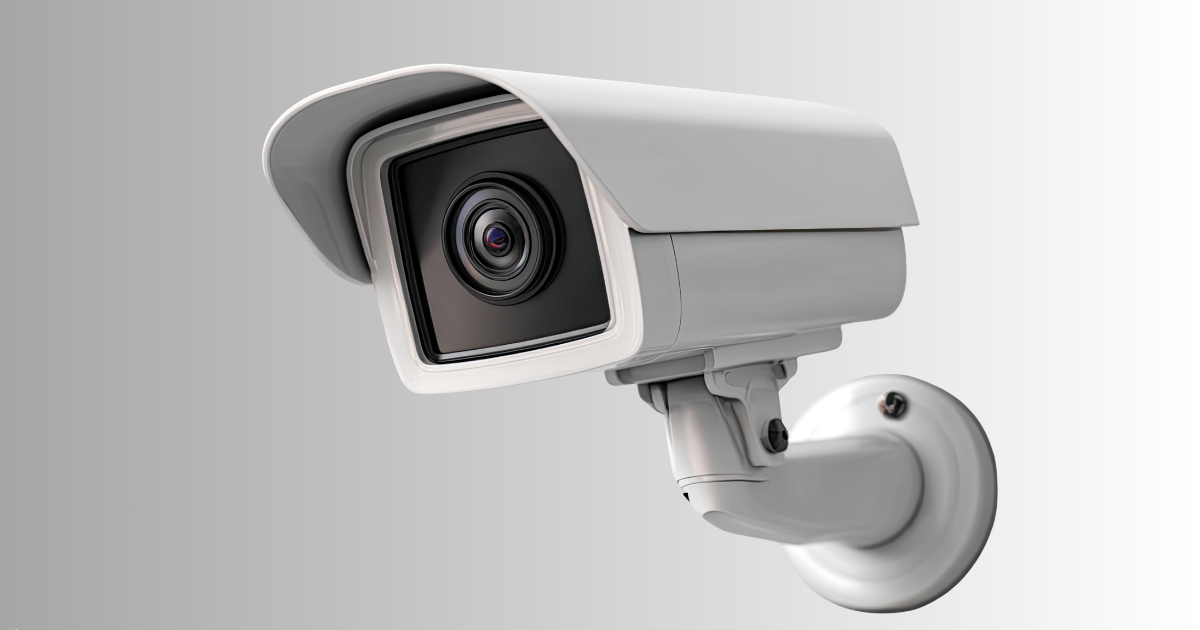
Video and photo evidence feels like the strongest kind of proof there is: it’s hard to argue with what a camera recorded. But Kenyan law treats electronic evidence very differently from an eyewitness account, and a recent election petition is a clean illustration of a problem that shows up constantly in commercial disputes, insurance claims, and workplace investigations: footage that looks damning on its face can still be legally worthless if it wasn’t authenticated the right way.
What happened in the case
A petitioner challenging an election result relied partly on video footage he said showed the winning candidate near voters shortly before an alleged bribery incident. The footage was played in court. But the court noted that the requirements of Section 106B of the Evidence Act (which governs the admissibility of electronic records) had not been satisfied. Without that foundation, the video could not do the evidentiary work the petitioner needed it to do, however persuasive it looked on a screen.
CB Mwongela & Co. Advocates acted for the returning officer and IEBC in Eliphas Nyaga Mbae v Wilson Nyaga Derebia & 2 Others, Chuka Chief Magistrate’s Court, Election Petition No. 2 of 2017, where this exact evidentiary gap featured in the court’s reasoning. Our litigation team advises businesses, insurers, and HR functions on preserving and presenting electronic evidence so it actually holds up when it matters.
Why “we have it on video” isn’t automatically enough
Section 106B exists because electronic evidence is uniquely easy to alter, mislabel, or take out of context: a video can be cropped, a timestamp can be wrong, a screenshot can be edited, and none of that is necessarily obvious from the file itself. Kenyan law responds to that risk by requiring the party relying on electronic evidence to lay a proper foundation: showing where the recording came from, how it was captured and stored, that it hasn’t been tampered with, and usually a certificate or supporting testimony from the person who produced or handled the device or system involved.
Courts have been consistent that this isn’t a technicality to be waived because the footage “looks real.” Without that foundation, a court can (and, as in this case, will) decline to give the footage any evidential weight at all, no matter how compelling it appears.
Where this bites businesses far more often than in election disputes
This issue comes up constantly outside the courtroom context most people associate with it:
Employers relying on CCTV footage in a disciplinary case or to support a termination, without being able to show the footage’s chain of custody or that the system wasn’t tampered with.
Insurers investigating suspected fraud using dashcam or CCTV footage submitted by a claimant or a third party, without verifying its source or integrity before relying on it to deny a claim.
Businesses relying on WhatsApp, email, or SMS screenshots as proof of an agreement, an admission, or a threat: screenshots are trivially easy to alter, and courts increasingly expect more than a printed image before treating them as reliable.
Security and facilities companies whose footage may be the central evidence in a dispute between third parties, but who haven’t built retention and chain-of-custody practices that would let that footage hold up if challenged.
What to do about it before you need the footage in court
Preserve the original, not just a copy. A screenshot of a screenshot, or a re-recorded video, degrades your ability to authenticate it later.
Document the chain of custody as you go. Who captured it, when, on what device or system, and who has had access to it since, written down at the time, not reconstructed later.
Know who your certifying witness will be. Someone (an IT administrator, a system operator, the device owner) needs to be able to testify to how the record was generated and that it hasn’t been altered.
Don’t assume “it’s obviously genuine” will carry the day. Courts are required to apply the statutory test regardless of how convincing the content looks.
Electronic evidence is often the most important evidence a business has — and also the most commonly mishandled. Getting the authentication right, before a dispute reaches court, is the difference between decisive proof and a video nobody is allowed to rely on.
CB Mwongela & Co. Advocates acted for the returning officer and IEBC in Eliphas Nyaga Mbae v Wilson Nyaga Derebia & 2 Others, Chuka Chief Magistrate’s Court, Election Petition No. 2 of 2017, where this exact evidentiary gap featured in the court’s reasoning. Our litigation team advises businesses, insurers, and HR functions on preserving and presenting electronic evidence so it actually holds up when it matters.


Leave A Comment